
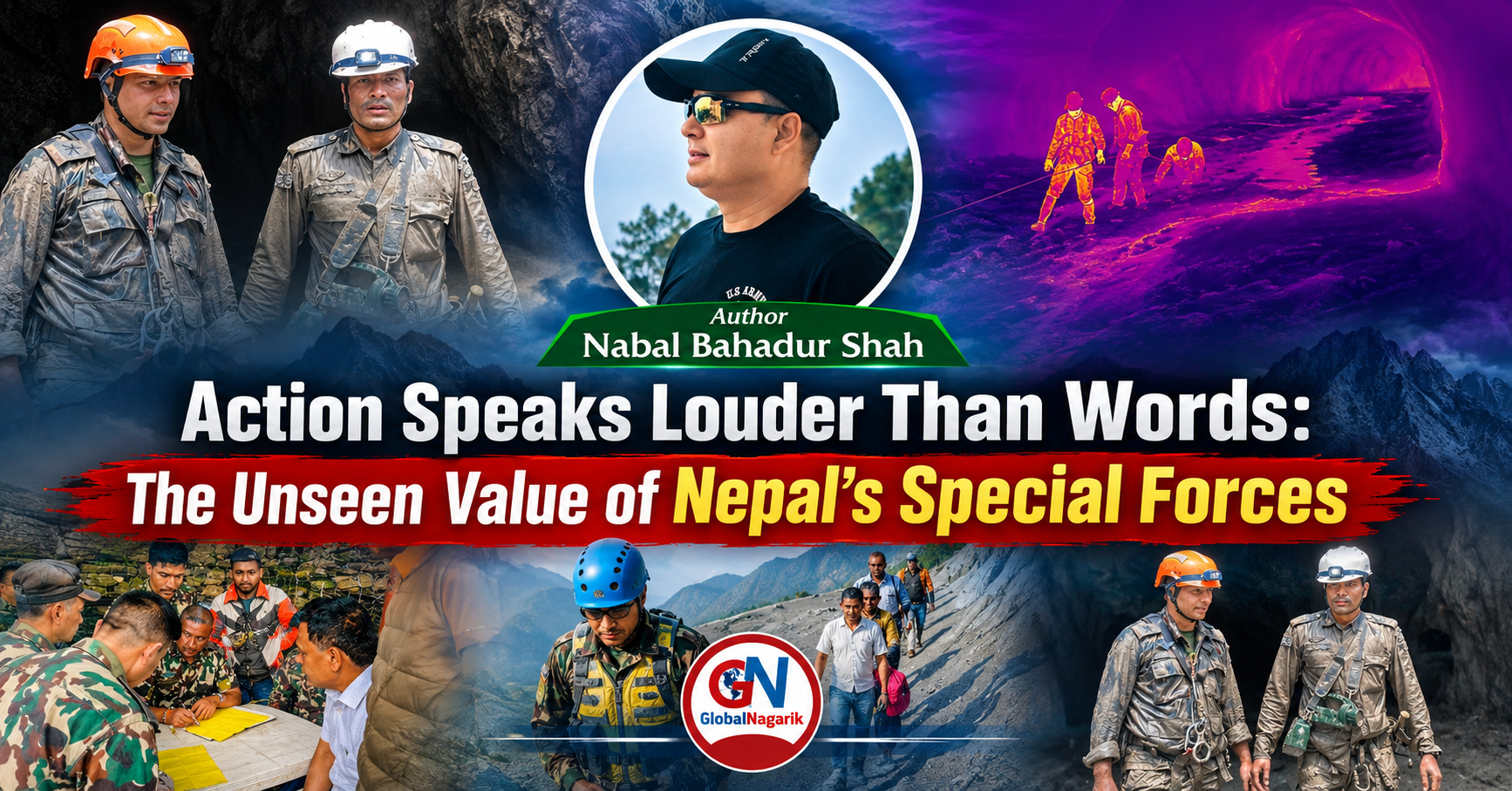
Few statements better describe the spirit of Special Forces. Their true worth is not measured by what they claim to be capable of, but by what they do when circumstances are at their most difficult, uncertainty and dangerous. Nepal Army’s Yuddha Bhairab Battalion (Special Forces) was established with the primary purpose of conducting small scale (Direct Action) missions and, particularly, Counter Terrorism operations. Its core responsibilities and primary operational role are distinct from those of conventional forces. However, from its early days, the unit has repeatedly demonstrated that the capabilities developed for combat can serve the nation far beyond the battlefield.
Almost every year, when Nepal faces natural disasters whether floods, landslides, earthquakes or other emergencies, Special Forces personnel have been called upon to support rescue and relief operations. They have also been employed in anti-poaching operations, particularly in protecting Nepal’s endangered Rhino population. These missions may appear very different from the tasks for which Special Forces are primarily trained, yet they demand many of the same qualities: courage, physical endurance, discipline, teamwork, sound judgment and the ability to operate in difficult and unpredictable environments.
The ongoing rescue operations along the Bhotekoshi Trishuli corridor provide yet another powerful example. Special Forces personnel are operating in extremely challenging conditions to rescue people affected by the disaster, including those reportedly trapped inside flooded tunnels. They are entering environments where visibility, access, communications, terrain and other conditions can change rapidly. These are not conventional battlefields, yet the operational mindset required is remarkably similar. The capabilities that a Special Forces operator develops to confront an enemy can become equally valuable when the mission is to save a life.
Special Forces are often regarded as highly versatile instruments of national power. Their effectiveness does not depend solely on sophisticated weapons, specialized equipment or carefully prepared plans. One of their greatest strengths is the ability to improvise, adapt and continue operating when circumstances do not go according to plan. These are the defining characteristics of Special Forces.
In a conventional operation, a force may have a defined objective, established procedures and predictable support arrangements. In a disaster environment, however, almost everything can change within minutes. Roads disappear, rivers change their course, structures collapse, communications fail and information becomes incomplete. The situation on the ground may be completely different from what was anticipated during planning. This is where the Special Forces mindset becomes particularly valuable (Improvise, Adapt and Overcome). Years of demanding training are designed not merely to teach an operator how to execute a particular mission, but how to think and function under pressure. The ability to assess a situation quickly, make decisions with limited information, use whatever resources are available and continue functioning in adversity becomes a powerful capability during any national emergency.
The men currently operating in Rasuwa are demonstrating precisely this quality. They are not simply performing a task assigned to them. They are applying their wartime capabilities to a humanitarian mission where the objective is no longer to defeat an adversary, but to bring people home safely. And that is perhaps the greatest value of a Special Forces capability in a country like Nepal.
Nepal is geographically challenging and highly vulnerable to natural disasters. Remote mountains, steep terrain, unstable slopes, powerful rivers and difficult access routes can turn a natural disaster into a complex emergency within a very short period. In such circumstances, a force capable of moving rapidly, operating independently, solving problems on the ground and functioning under extreme pressure can make a critical difference.
The experience of Yuddha Bhairab Battalion demonstrates that a unit created for specialized combat missions can become an important national asset during times of peace and disaster as well. Their role in rescue and relief should therefore not be viewed as something outside the identity of Special Forces. Rather, it demonstrates the broader value of the capabilities they possess. The mission may change. The environment may change. The tools may change. But the mindset remains the same.
Today, along the Trishuli corridor and inside dangerous tunnel environments, Nepal’s Special Forces are once again demonstrating what disciplined training, courage and adaptability can achieve. They are not waiting for the danger to pass. They are moving into danger to bring others out. That is the essence of service. That is the value of capability. And ultimately, that is why action speaks louder than words.
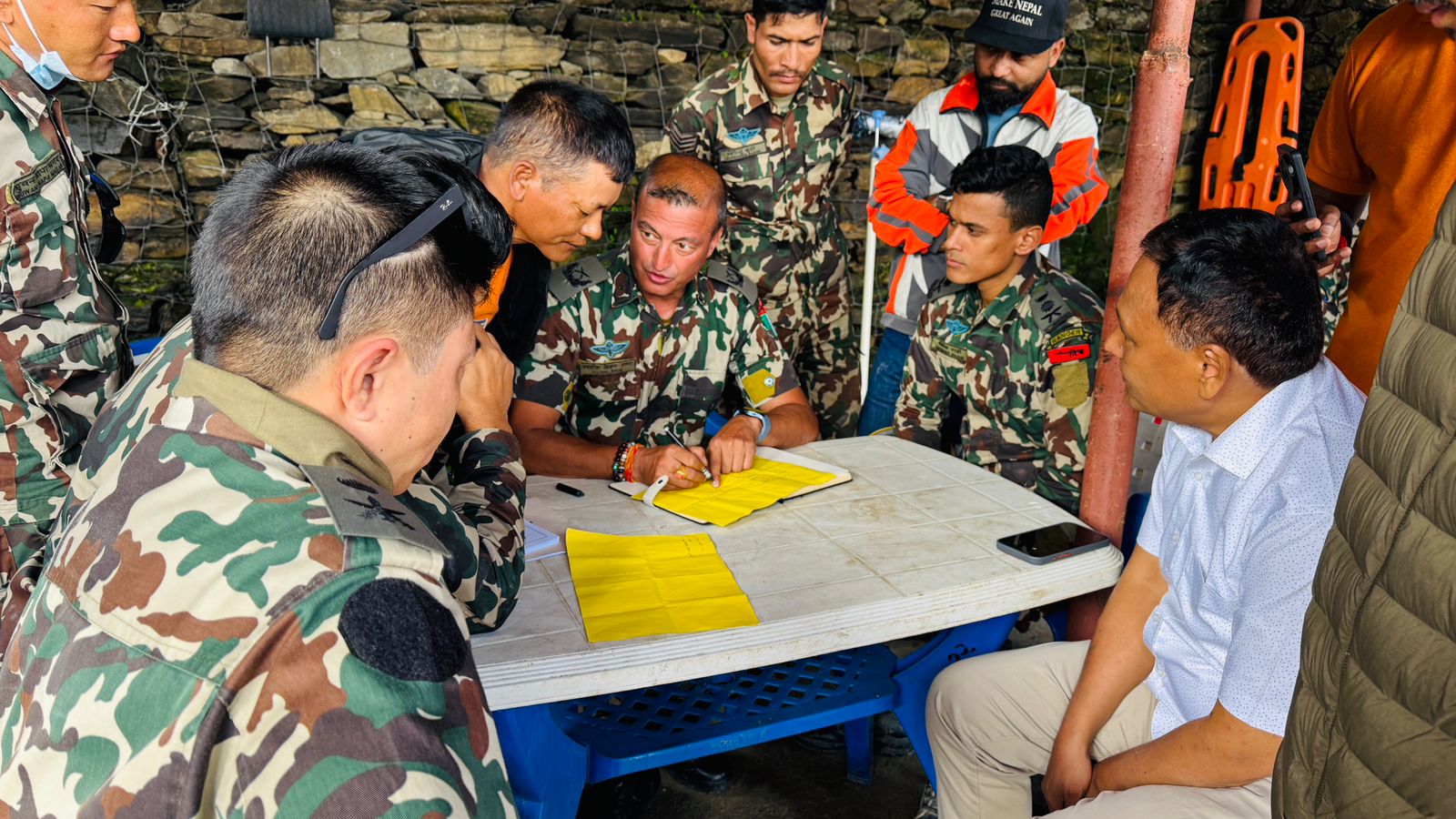
Extended TAC HQ at Dhunche with Brig Gen Ujjwol Bikram Rana SF
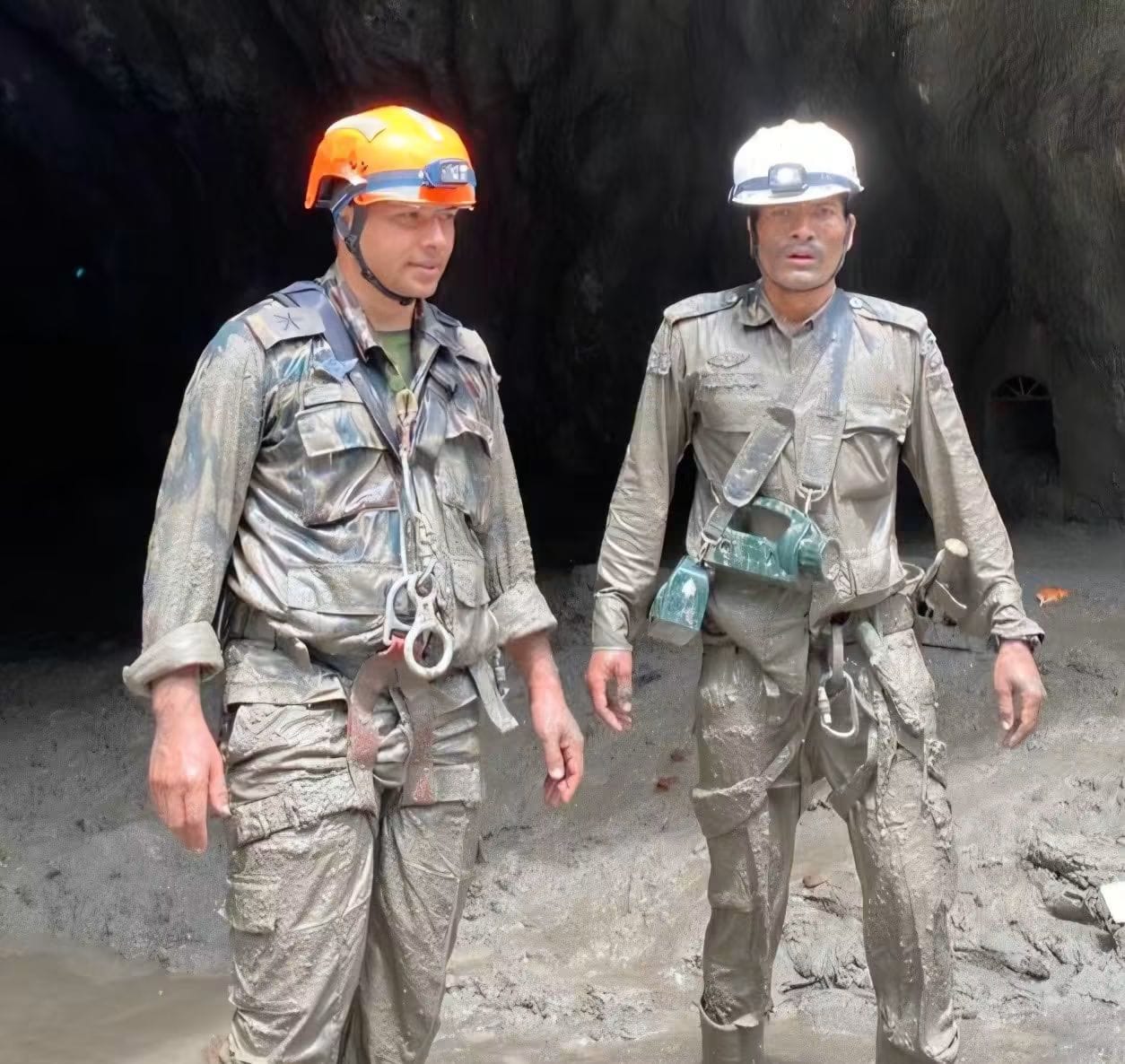
Red Helmet Maj Jivan Khadka and White Helmet Sgt Birendra Budha YB in Hukabesi 216 Tunnel
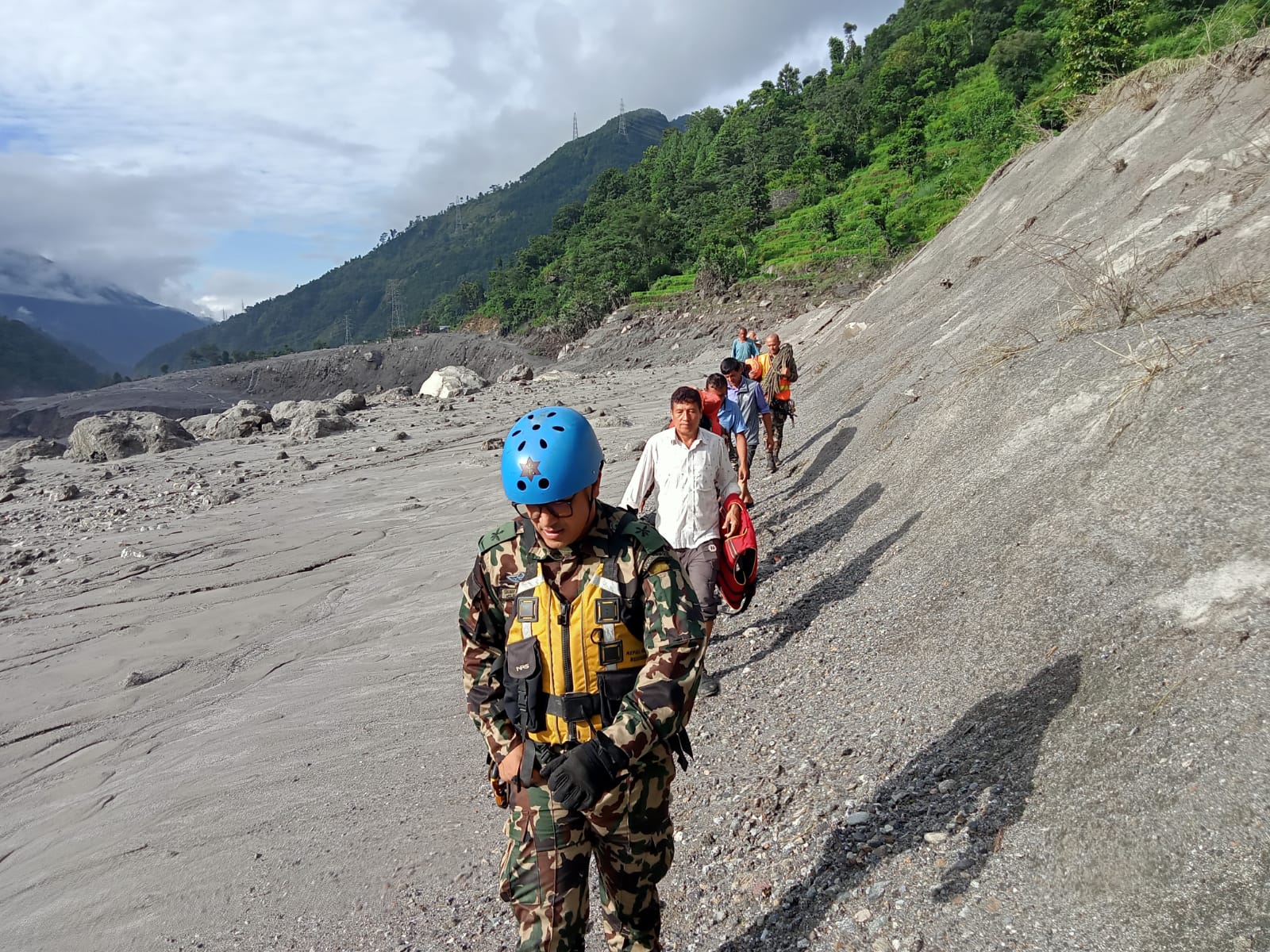
Blue Helmet Maj Milan Joshi in Upeer Trisuli 3A
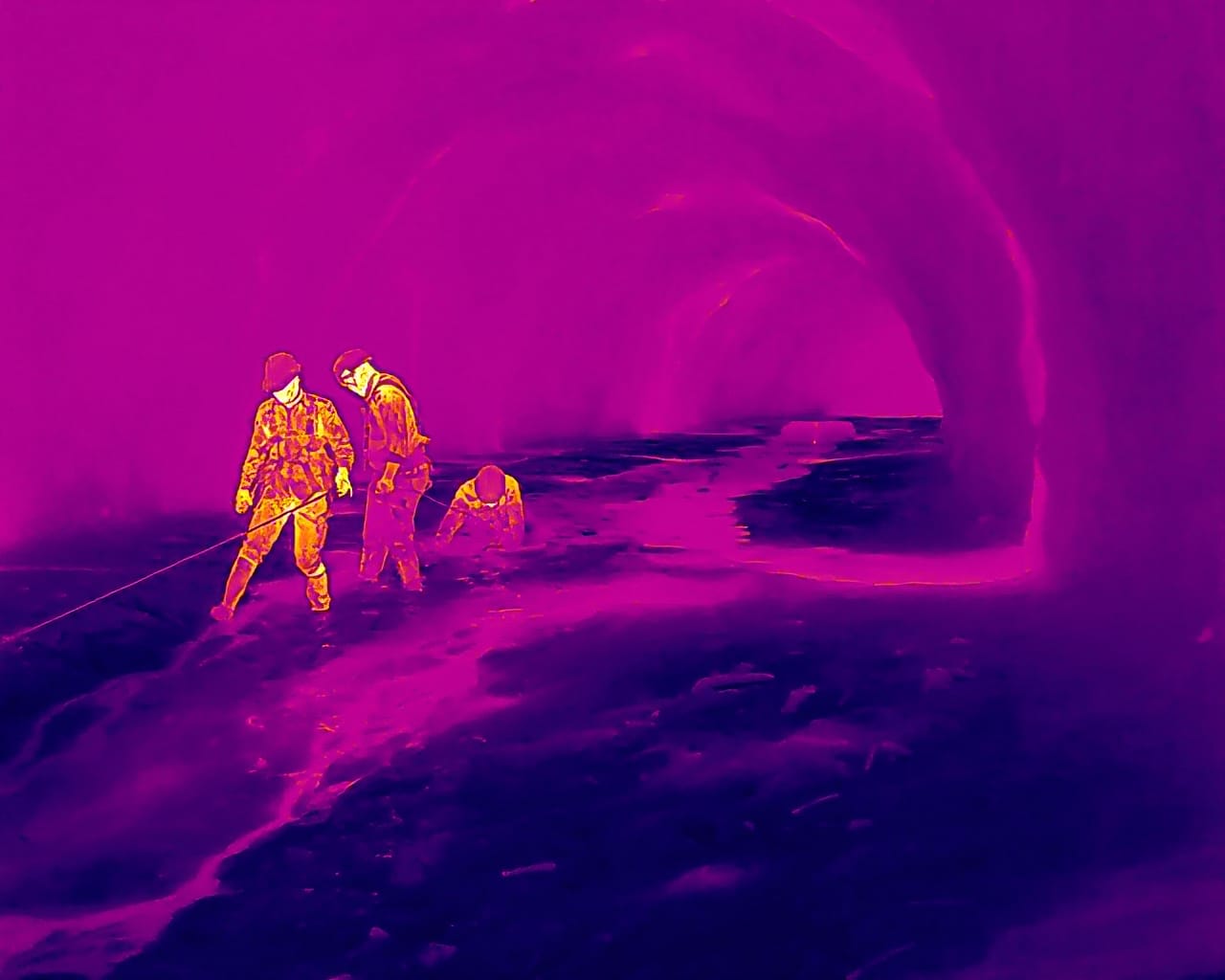
These cave divers are Special Forces combat swimmers, trained to operate in the water under extreme conditions. But they were never specifically trained or equipped for flooded cave or tunnel diving.
Yet they are going in, facing darkness, strong currents and unknown dangers, to save lives, putting their own lives at risk.
“Neither Submission Nor Retreat”
Publish Date: September 2, 2026







Feedback