
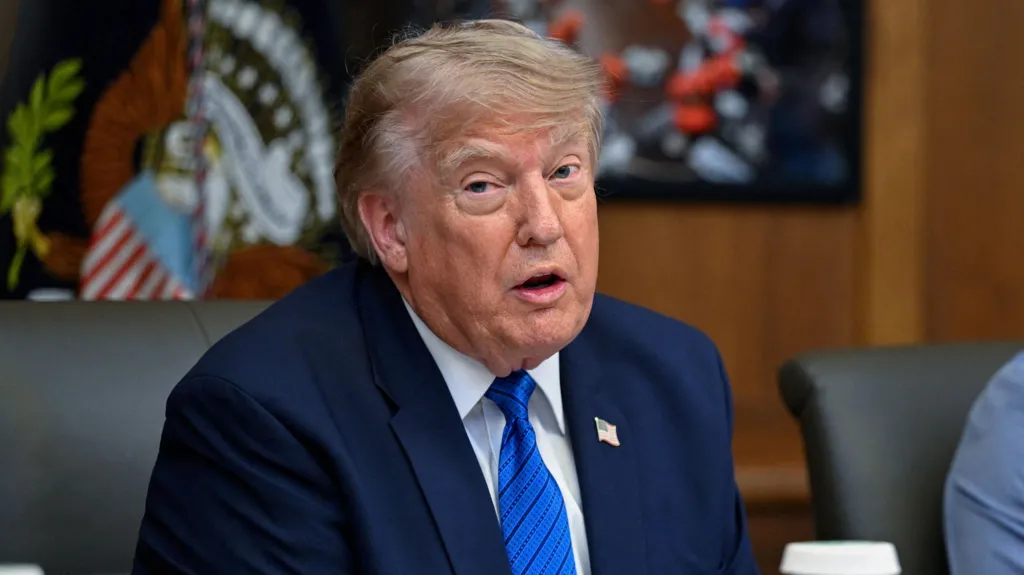
Washington, D.C. — US President Donald Trump has announced that he has suspended planned military strikes against Iran, saying the attacks will remain on hold if a diplomatic agreement is reached “rapidly.”
In a post on his Truth Social platform on Saturday, Trump said Iran and several Middle Eastern countries had urged the United States to delay military action, claiming that the broad framework of a potential agreement had already been established. He warned, however, that the US military remained fully prepared to launch a powerful offensive if negotiations failed.
Trump’s statement came amid reports that the United States and Israel had been considering a new wave of large-scale strikes targeting Iran’s energy infrastructure. According to CBS News, the proposal was discussed during a cabinet meeting at Camp David on Friday.
Iran swiftly rejected Trump’s claim that it had requested a pause in military action. The country’s semi-official Mehr News Agency described the president’s remarks as “a new lie.”
Iran’s acting Defence Minister, Majid Ibn al-Reza, said Tehran considered every military threat from its adversaries to be serious and credible, regardless of whether it formed part of psychological pressure.
“We will neither be caught off guard nor remain passive,” he said, warning that Iran was prepared to respond to any aggression.
Earlier, the US government had advised American citizens across the Middle East to remain vigilant and be prepared to leave the region should tensions escalate.
In his social media post, Trump declared that the US was “locked and loaded” and capable of carrying out military action against Iran with a level of force “not seen since World War II.” However, he argued that postponing the attack would ultimately benefit global stability and Iran’s future prosperity.
The latest development mirrors Trump’s earlier strategy of combining military threats with diplomatic pressure. In April, he warned of devastating consequences if Iran refused to engage in peace talks, a move that eventually led to direct negotiations led by Vice President JD Vance. Those talks, however, ended without an agreement due to deep disagreements between the two sides.
Regional diplomacy also intensified over the weekend. Saudi Crown Prince Mohammed bin Salman spoke with Trump by telephone, emphasizing the importance of dialogue, reducing tensions and pursuing a ceasefire that could pave the way for a diplomatic solution.
Washington’s Gulf allies remain concerned that any military escalation could expose countries such as Bahrain, Jordan and the United Arab Emirates to Iranian missile attacks, particularly against critical infrastructure.
The conflict between Washington and Tehran has intensified since a ceasefire reached in April collapsed in June. The US has carried out strikes on Iranian targets and imposed a naval blockade on Iranian ports, while Iran has launched missiles and drones against US assets across the Middle East and threatened shipping through the strategically important Strait of Hormuz.
The ongoing confrontation has also contributed to significant volatility in global oil prices.
At home, Trump is facing growing political pressure. Recent polling indicates that a majority of Americans oppose the conflict with Iran, raising concerns that any further military escalation could increase fuel prices, hurt the US economy and influence the upcoming midterm elections.
Publish Date: August 2, 2026








Feedback