
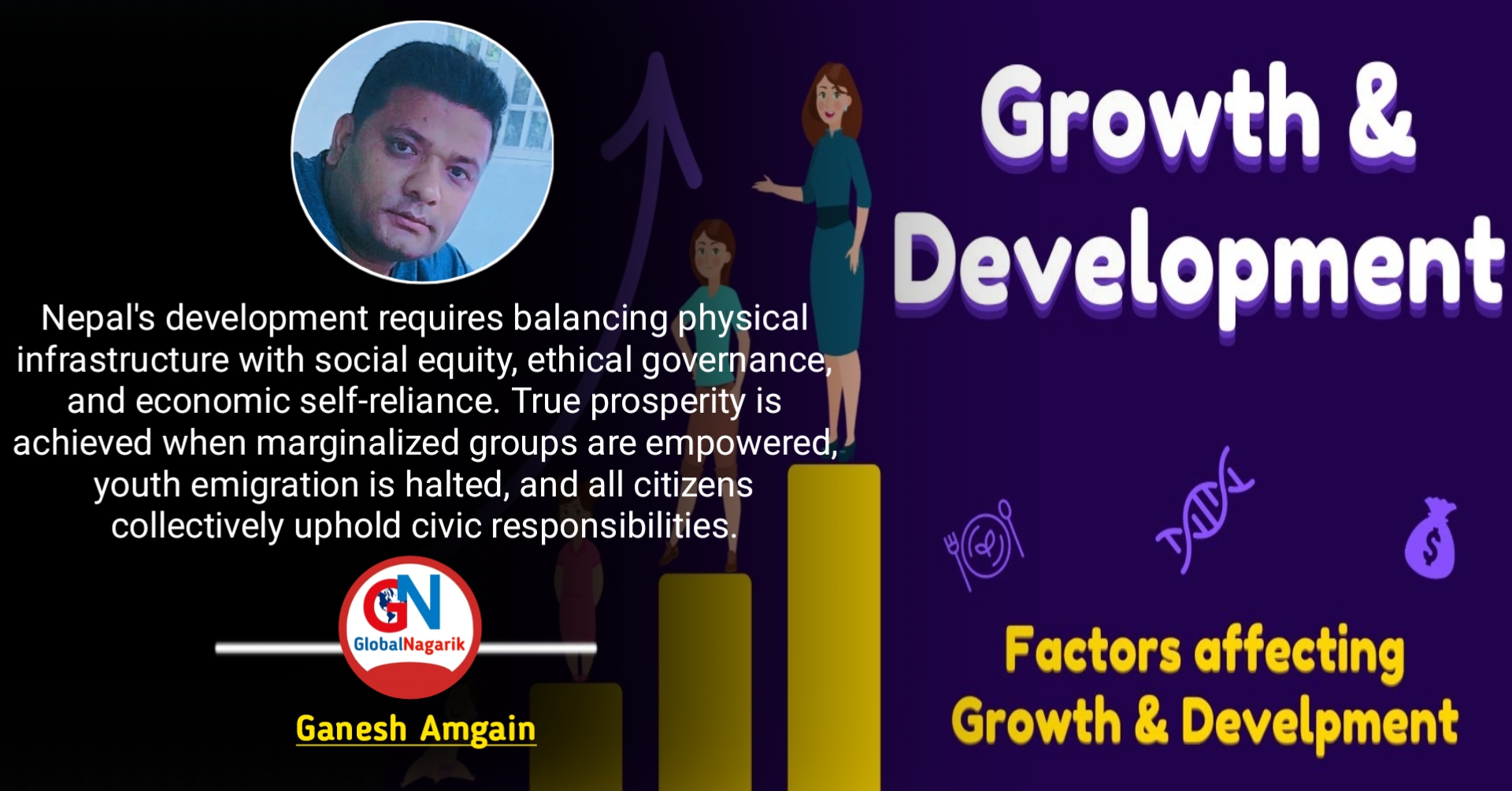
The discourse surrounding development in Nepal is frequently confined to the visible – the blacktopping of serpentine mountain roads, the soaring concrete walls of hydroelectric dams, or the long-awaited arrival of electricity in remote hamlets. While these physical markers are undeniably essential, true development is a far more intricate and multidimensional tapestry. It is only fully realized when every citizen experiences a tangible, qualitative improvement in their daily standard of living, when social justice is woven into the very fabric of state institutions, and when national pride is bolstered by genuine economic self-reliance. In a nation defined by its rugged topography and complex social layers, progress must strike a delicate balance between rapid growth, environmental sustainability, and the rigors of good governance.
Until our developmental model successfully brings marginalized communities into the mainstream and pivots the economy from a debilitating cycle of import-dependency to one of robust domestic production, it remains a hollow achievement. A road that leads to a village where the youth have all emigrated in search of work is not a road to prosperity, but a path of exodus. We must transition toward an integrated vision where material wealth, social harmony, and human security coexist. Development is, at its heart, a state of being where every citizen – regardless of their background or geography – feels safe, respected, and empowered to contribute to the national narrative. This requires moving beyond a “hardware-only” approach and investing deeply in the “software” of social equity and institutional integrity.
The Moral Core of Modernization
Infrastructure serves as the skeleton of a nation, but human capacity and institutional integrity constitute its soul. The expansion of physical hardware loses its transformative power if it is not accompanied by the software of social equity. Development must act as a guarantee of social justice, actively dismantling long-standing barriers of caste, language, religion, and regional disparity that have historically sidelined vast segments of the population. Furthermore, the haste of todayÔÇÖs construction must not steal from the needs of tomorrow; our current trajectory must safeguard environmental equilibrium for future generations. True prosperity is realized only when the expansion of a power grid is matched by the expansion of inclusive opportunities for those the grid serves.
The advancement of Nepal requires a seamless synergy between strategic economic planning and a profound moral awakening. While massive investments in hydropower and digital connectivity are vital, these physical milestones only gain legitimacy through the presence of an ethical civil society. A moral citizenry understands that progress is not a one-way street of demanding rights from the state; it prioritizes civic duties such as the honest payment of taxes, the vigilant protection of public property, and a steadfast adherence to the rule of law. A culture of discipline and professional integrity is the most potent antidote to the twin plagues of procrastination and corruption that have historically stifled our growth and diverted resources from those who need them most.
Modernizing agriculture and promoting tourism remain the dual backbones of our national economy, yet both require an urgent shift in mindset. Poverty cannot be eradicated through subsistence farming; it requires a transformation into commercial, tech-driven enterprises supported by scientific market management. By linking the local farm to the global market, we can finally break the cycle of rural indigence. In this ethical framework, the “intellectual class” cannot remain a passive observer; it must provide constructive, evidence-based policy input, while civil society acts as a fierce watchdog. This collective vigilance ensures transparency and prevents the misappropriation of state resources, rooting national development in the bedrock of individual character and collective responsibility.
Security, Justice and Inclusive Growth
The benefits of development are often trapped in urban centers, creating a glaring divide between the capital and the corridors of the hinterland. For these fruits to reach the grassroots, social justice and a radical equality of opportunity are non-negotiable. Nepal cannot claim meaningful progress while women, Dalits, and ethnic minorities remain on the periphery of the decision-making process. Justice must mean more than a favorable verdict in a courtroom; it must manifest as a system where the most vulnerable can access government services without the hurdles of bureaucracy, nepotism, or bribery. Such inclusive growth is the most effective tool for long-term conflict mitigation and the strengthening of national unity.
A secure society is the primary catalyst for economic flourishing, as entrepreneurship withers and investment flees where life and property are at risk. Ensuring peace is the professional and impartial responsibility of our security forces, yet security in the 21st century is broader than physical safety. It encompasses “Human Security” – freedom from hunger, access to quality healthcare, and resilience against environmental disasters. In our digital age, safeguarding citizens against cybercrimes and data exploitation is a new frontier of protection. When justice and equality are visible, a sense of “state ownership” takes root among the people, transforming them from subjects to active stakeholders in the nation’s future.
This harmony between peace, security, and prosperity ensures that material infrastructure serves its ultimate purpose: the preservation of human dignity. When every citizen feels that the state is an impartial arbiter of justice and a reliable provider of security, the social contract is renewed. This sense of belonging is what fuels the collective energy required for nation-building. We must move toward a model where the success of a hydroelectric project is measured not just by the megawatts it produces, but by the number of local lives it illuminates and the small businesses it empowers. Inclusive justice is the glue that holds a diverse society together during the turbulent phases of rapid economic transition.
Dismantling Barriers and Structural Reform
NepalÔÇÖs path to prosperity is currently littered with structural and behavioral obstacles that demand immediate intervention. Political instability and policy inconsistency create a vacuum where corruption thrives and long-term planning fails. The chronic inability to utilize capital expenditure, coupled with an exhausting amount of red tape, has turned potential success stories into stalled projects. Perhaps the most tragic barrier is the exodus of our youth; when the brightest minds flee, our productive sectors are left under-resourced and our villages ruminate in silence. To reverse this, the state must transition from a heavy-handed regulator to a proactive facilitator, creating investment-friendly laws and ensuring project accountability through strict timelines.
Our trade deficit is a symptom of a deeper malaise: a culture of import-based consumption that drains our foreign reserves. We must launch a vigorous national campaign for “Production and Export Promotion,” offering significant incentives for businesses that utilize domestic raw materials. Culturally, we must also replace the haphazard, “dozer-led” construction culture with the principles of green infrastructure. Scientifically utilizing our natural resources – water, forests, and minerals – while maintaining ecological integrity will provide a sustainable foundation for the economy. We must move away from the “broker-led” economic model toward one that rewards value addition, manufacturing, and genuine service delivery.
Furthermore, we must acknowledge that superstitions and discriminatory traditions are invisible chains on our economy. A value-based education system is needed to replace political patronage with meritocracy in our administration. Until our systems reward talent over “connections”, resources alone will never be enough to bridge the gap between potential and reality. This structural reform requires the government to act as a guardian of the law, the private sector to drive innovation through responsible investment, and the citizen to move from a consumer of development to a protector of it. By choosing domestic products and respecting public assets, the individual becomes the primary agent of change in this systemic overhaul.
The Symphony of Collective Responsibility
Development is not the sole burden of the government; it is a shared journey requiring the synchronized efforts of all sectors of society. The government must act as the visionary guardian, providing the legal framework, maintaining peace, and managing large-scale strategic infrastructure. Simultaneously, the private sector must serve as the engine of job creation, fueled by a commitment to transparent taxation and ethical business practices. Meanwhile, intellectuals and civil society must remain the conscience of the nation, monitoring progress and challenging mismanagement with data-driven insights. The individual citizen, as the ultimate stakeholder, must take ownership of the nationÔÇÖs assets and prioritize the collective good over short-term personal gain.
When all stakeholders fulfill their roles, the collective goal of prosperity shifts from a distant dream to a tangible reality. This synergy requires a culture of mutual trust – where the state trusts the entrepreneur to innovate, and the citizen trusts the state to provide fair play. Embracing the “Leave No One Behind” philosophy means ensuring that the light of progress reaches the most remote corners of our Himalayas and the deepest pockets of the Terai. The transition from a cycle of crisis to a culture of contribution is not just an economic necessity but a patriotic duty.
Conclusion: The Soul of Prosperity
In the final analysis, NepalÔÇÖs path to prosperity requires more than just a generous budget; it requires a collective, unwavering will. Physical infrastructure is merely the skeleton of a modern state, but the flesh and blood are provided by good governance, social justice, and a moral society. When the state leads with integrity, the private sector invests with responsibility, and the citizens act with discipline, the dream of a “Prosperous Nepal” becomes an achievable reality. We must move forward with the understanding that self-reliance is not about isolation, but about standing tall in the global community. By being responsible, disciplined, and united, we can ensure that our future is defined not by the obstacles we faced, but by the dignity and self-reliance we built together. The time to contribute is now; our legacy will be the resilient, equitable, and flourishing nation we leave for the generations to follow.
Publish Date: April 15, 2026







Feedback