
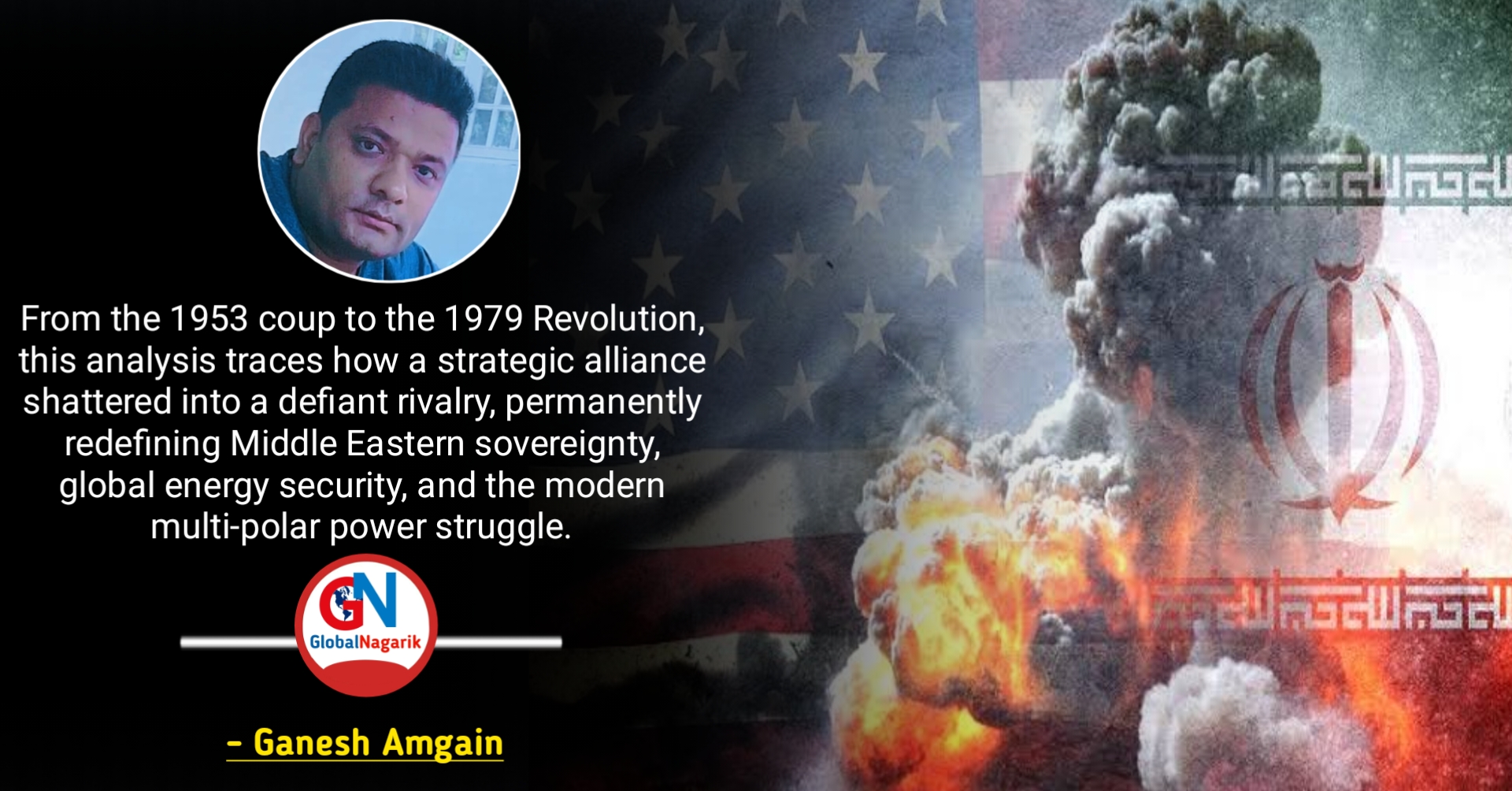
Looking at the frost-bitten relations between Iran and the United States today – characterized by harsh sanctions, proxy wars, and bellicose rhetoric – it is almost impossible for the modern observer to imagine they were once the closest of strategic partners. Before the 1979 Islamic Revolution, Iran served as the primary pillar of American interests in the Middle East, a relationship so intimate it was often described as a “special relationship” of its own. Following the devastation of World War II, as the global thirst for energy skyrocketed and the vast potential of Iranian petroleum became evident, the U.S. and UK deepened their influence over the Persian plateau. They presented Shah Mohammad Reza Pahlavi not just as a king, but as a “modern monarch” tailored specifically to serve Western interests and block Soviet encroachment. In exchange for a steady flow of advanced weaponry and industrial technology, American and British firms enjoyed a near-monopoly over Iran’s black gold. To Washington, the ShahÔÇÖs Iran was a formidable fortress against the spread of Communism – a friendship that flourished in the opulence of palaces but began to fester in the disenfranchised streets of Tehran and Mashhad.
The first major fracture in this seemingly unbreakable alliance appeared in the early 1950s with the rise of Mohammad Mossadegh. A charismatic, nationalist prime minister who captured the soul of the Iranian people, Mossadegh challenged the very foundations of Western dominance. He made the historic, albeit controversial, decision to nationalize the oil industry, effectively ending the decades-long hegemony of the Anglo-Iranian Oil Company. While this was a triumph for Iranian economic sovereignty and national pride, it was perceived as an intolerable act of defiance by the West, particularly at the height of the Cold War. Consequently, in 1953, the CIA and the British MI6 orchestrated “Operation Ajax,” a clandestine coup that toppled the democratically elected Mossadegh and reinstated the Shah with absolute, autocratic power. This pivotal moment did not just strangle the budding Iranian democracy; it planted a seed of profound betrayal and virulent anti-American sentiment. The coup transformed the United States, in the eyes of many Iranians, from a democratic ideal into a “Great Satan” and an imperialist power, creating a psychological wound that would define the decades to come.
Restored to his throne through foreign intervention, the Shah launched the “White Revolution,” a sweeping, multi-decade modernization program heavily backed and financed by Washington. While the initiative undeniably improved national infrastructure, expanded literacy, and modernized the legal code, its aggressive push to Westernize a deeply traditional and religious society backfired spectacularly. In cosmopolitan cities like Tehran, the sudden influx of Western culture – symbolized by alcohol, gambling, and American fashion – became hallmarks of progress for the elite but sources of profound alienation for the religious masses. To maintain control over a growingly restless population, the Shah relied on SAVAK, his notorious and brutal secret police, which became synonymous with midnight disappearances, torture, and the suppression of any intellectual or political dissent. Amidst this atmosphere of cultural erasure and political repression, an exiled cleric named Ayatollah Ruhollah Khomeini began to mobilize the masses. Using smuggled audio cassettes and handwritten manifestos, Khomeini successfully framed the ShahÔÇÖs regime as a “puppet of the West,” turning the kingÔÇÖs perceived subservience into a powerful rallying cry for a combined religious and nationalistic revolution.
By late 1978, the tremors of social and economic discontent had consolidated into a full-scale political earthquake. On September 8, 1978, a day now etched in history as “Black Friday,” the ShahÔÇÖs military opened fire on thousands of peaceful protesters gathered at TehranÔÇÖs Jaleh Square. Rather than crushing the spirit of the movement, the massacre acted as a catalyst for a massive, nationwide strike that brought the countryÔÇÖs economy to a grinding halt. Factories went silent, oil production – the lifeblood of the nation – ceased, and millions of Iranians from all walks of life took to the streets, their voices united in the thunderous chant of “Marg bar Amrika” (Death to America). Realizing that his military could no longer sustain his rule and that his foreign backers were wavering, the Shah fled into a lonely exile on January 16, 1979. Just two weeks later, Ayatollah Khomeini returned from France in a moment of sheer triumph, greeted by a staggering sea of five million supporters. His arrival marked the definitive end of 2,500 years of Persian monarchy and signaled a seismic shift in the global balance of power that would permanently redraw the map of the Middle East.
The immediate aftermath of the revolution was a period of intense chaos, revolutionary fervor, and deep-seated suspicion. When the United States government made the fateful decision to allow the deposed and ailing Shah into the country for cancer treatment, the Iranian revolutionary guard and public feared a repeat of the 1953 coup. This paranoia reached its zenith on November 4, 1979, when a group of radicalized students stormed the gates of the U.S. Embassy in Tehran, seizing 52 American diplomats and staff members as hostages. Their demand was uncompromising: the U.S. must extradite the Shah to Iran to face a revolutionary tribunal and execution. The resulting “Iran Hostage Crisis” dragged on for an agonizing 444 days, becoming a nightly fixture on American television and shattering the prestige of the United States. It led to a total severance of diplomatic ties – a bridge that remains unbuilt nearly fifty years later. This event effectively transformed Iran from AmericaÔÇÖs most reliable regional partner into its most dedicated and vocal adversary, launching an era of global politics defined by mutual distrust and ideological warfare.
In a desperate, high-stakes bid to rescue the captives and salvage his political reputation, President Jimmy Carter ordered “Operation Eagle Claw” in April 1980. The mission was an ambitious, multi-service military operation involving elite special forces and sophisticated aircraft, but it ended in absolute tragedy in the remote Tabas desert. A combination of a sudden, fierce haboob (sandstorm) and critical technical failures led to a catastrophic collision between a helicopter and a transport plane, resulting in the deaths of eight U.S. servicemen. The images of charred American wreckage and the bodies of soldiers left behind in the Iranian desert were a humiliating, public blow to the worldÔÇÖs only superpower. For Ayatollah Khomeini, the disaster was nothing short of “divine intervention,” a sign that the revolution was under the protection of a higher power. The failure of Eagle Claw was the final nail in the coffin for the Carter presidency, ensuring his defeat in the upcoming election while simultaneously hardening the animosity between the two nations into a deeply personal, almost mythological vendetta that persists to this day.
The hostage crisis finally reached its conclusion on January 20, 1981, ironically occurring just minutes after Ronald Reagan was sworn in as the 40th President of the United States. Iran had skillfully used the hostages as a political lever until the very last second of the Carter administration, releasing them only after the U.S. signed the Algiers Accords. Under this agreement, the U.S. unblocked nearly $12 billion in frozen Iranian assets and pledged a policy of non-interference in Iranian internal affairs. This conclusion was seen as a massive diplomatic victory for the young Islamic Republic, sending a clear and defiant message to the international community: Iran was no longer a “client state” or a “satellite” of Washington. Instead, it had emerged as a revolutionary power capable of forcing the hand of a global superpower through sheer ideological willpower and unconventional tactics. It set the definitive template for a new era of Iranian foreign policy – one that rejected both the Western and Eastern blocs in favor of a path rooted in “neither East nor West,” resistance, and calculated confrontation.
Post-revolutionary Iran chose to institutionalize its defiance by creating a unique political system based on the concept of Velayat-e Faqih (Guardianship of the Jurist). In this system, while democratic elements like a parliament and a presidency exist, ultimate authority resides with a Supreme Leader who ensures the state never deviates from its Islamic revolutionary path. To safeguard the regime from both internal dissent and external threats, the Islamic Revolutionary Guard Corps (IRGC) was established as an elite military branch separate from the regular army. Over the decades, the IRGC has evolved into a massive economic and military powerhouse, extending IranÔÇÖs influence far beyond its borders. Today, through “proxy warfare” and the cultivation of the “Axis of Resistance” – including groups like Hezbollah in Lebanon, Hamas in Gaza, and the Houthi rebels in Yemen – the IRGC directly challenges U.S. and Israeli interests. This strategic “forward defense” allows Iran to confront its enemies on foreign soil, creating a regional shield that makes a direct military invasion of the Iranian heartland a daunting and potentially catastrophic prospect for any adversary.
Despite the prevailing Western media narrative that often depicts Iran as a monolith of religious backwardness and social stagnation, post-revolutionary statistics offer a much more complex and surprisingly progressive picture in certain sectors. Under the ShahÔÇÖs “modern” regime, female literacy was a staggering 35%; today, under the Islamic Republic, it has surged to nearly 99%. Women currently comprise over 60% of university students, excelling in fields such as engineering, medicine, and nuclear physics. Furthermore, while the United States waited until 2021 to inaugurate its first female Vice President, Iran had already appointed Masoumeh Ebtekar to that high-ranking position as early as 1997. While it is true that the struggle for personal liberties, social freedoms, and the mandatory dress code remains a major source of internal tension and international condemnation, the country has undeniably invested heavily in human capital and scientific self-sufficiency. This internal duality – between a rigid religious hierarchy and a highly educated, modern-leaning youth population – continues to be the primary engine of change within the Iranian domestic landscape.
Ultimately, the enduring standoff between the United States and Iran is far more than a simple diplomatic disagreement or a dispute over nuclear centrifuges; it is a profound, long-term battle for national identity, cultural sovereignty, and regional hegemony. WashingtonÔÇÖs foreign policy often seems haunted by a nostalgia for the pre-1979 order, frequently employing “maximum pressure” campaigns to force a regime change or a return to subservience. Conversely, Tehran remains fiercely committed to its role as an independent, non-aligned regional power that refuses to bow to Western dictates. Given its strategic geography – specifically its ability to close the Strait of Hormuz, through which 20% of the worldÔÇÖs oil passes – Iran holds a massive lever over the global economy that cannot be ignored. As the world transitions toward a multipolar reality, and as Iran strengthens its strategic partnerships with China and Russia, the resolution of this decades-old rivalry remains the most critical variable for the future of Middle Eastern peace and global economic stability. This conflict is not merely a relic of the Cold War; it is a defining struggle of the 21st century.
Publish Date: March 25, 2026




Feedback