
An international organization is an official body established by two or more sovereign nations to achieve shared objectives. Such organizations are primarily constructed on the basis of multilateral treaties, agreements, or charters, possessing their own distinct legal existence, permanent structures, and secretariats. International organizations are mainly classified into two types: inter-governmental and international non-governmental organizations. The core philosophy behind establishing these institutions is “cooperation and coexistence,” playing a coordinating role in maintaining global peace, security, socioeconomic development, humanitarian assistance, and ensuring compliance with international law. In today’s era of globalization, these organizations provide a common forum to combat shared challenges such as climate change, terrorism, and economic crises.
International organizations possess a unique and specific nature that distinguishes them from ordinary associations, where multilateral membership is a mandatory prerequisite. These entities do not operate on mere whims or verbal agreements; rather, their establishment is possible only through formal international treaties or charters. They maintain a permanent structure, a secretariat, and an international legal personality, ensuring administrative continuity even when representatives of member nations change. Although the democratic principle of “one country, one vote” is generally adopted in decision-making, special privileges are also allocated based on the balance of power. In brief, autonomy, secure financial management, mediation in dispute resolution, and global or regional influence are the primary characteristics of international organizations.
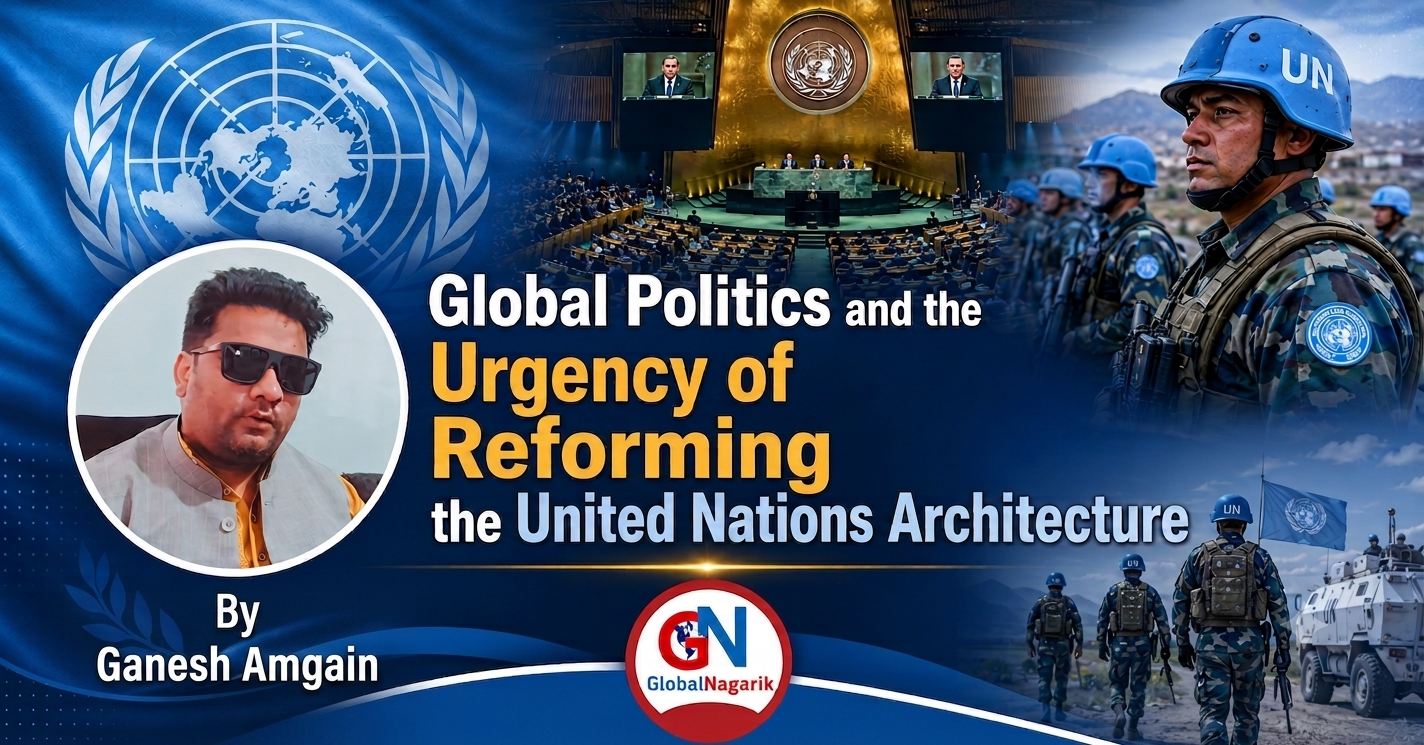
The United Nations (UN), the world’s largest and most prestigious international organization, was established against the backdrop of the Second World War. The 1941 Atlantic Charter, the 1942 Declaration by United Nations, and the 1944 Dumbarton Oaks Conference served as historic milestones in its evolutionary trajectory. Ultimately, representatives from 50 countries engaged in intensive deliberations to draft the Charter during the San Francisco Conference, which commenced on April 25, 1945. Following the signing of the document on June 26, 1945, and with Poland joining as the 51st foundational member, the United Nations was formally established on October 24, 1945. Headquartered in New York, the organization recognizes six official languages and currently commands a membership of 193 states.
Structure of Core Organs
The Charter of the United Nations establishes six principal organs to run the institution, executing functions ranging from policy-making to judicial adjudication. The UN is a dynamic and multidimensional international institution established in 1945 with the objective of maintaining global peace, security, and coexistence. Through its principal organs, the organization executes the operation, policy formulation, implementation, and judicial resolution of the global governance system in a coordinated manner. At the center of the United Nations sits the General Assembly, which functions as a ‘World Parliament’ with equal representation for all member states.
The General Assembly is the largest, most inclusive, and democratic organ of the United Nations, regarded as the “supreme policy-making body of the world.” Because all 193 member states hold equal representation in this organ, it is also termed the global town hall. Regardless of geographic size, population, or economic capacity, the democratic principle of ‘one nation, one vote’ applies here. The regular session of the General Assembly commences in September every year, serving as a forum for intense debate and voting on critical global issues. While a two-thirds majority is mandatory to pass resolutions on peace and security, the admission of new members, and the annual budget, ordinary matters are decided by a simple majority.
Operating within the framework of the Charter, the General Assembly executes vital financial responsibilities, including approving the annual budget and determining the financial assessments of member states. Furthermore, it holds the authority to appoint the Secretary-General upon the recommendation of the Security Council, elect judges to the International Court of Justice, and elect the non-permanent members of the Security Council. By adopting the ‘Universal Declaration of Human Rights’ in 1948, the General Assembly laid a resilient foundation for civil liberties and human dignity in human history. In 2015, this very organ adopted the 17 ‘Sustainable Development Goals’ aimed at eradicating poverty and protecting the planet by 2030. The historical diplomatic contribution of the General Assembly in ending colonialism, promoting disarmament treaties, and codifying international law remains unparalleled.
The Security Council operates as the most powerful executive organ, entrusted with the primary responsibility of maintaining international peace and security. This Council consists of 15 member states, featuring 5 permanent members (P5): the United States, Russia, China, the United Kingdom, and France. The remaining 10 non-permanent members are elected by the General Assembly for a two-year term based on equitable geographical distribution. The permanent members possess the special privilege of the ‘veto’ or negative vote, meaning no substantive resolution can be adopted if any of them dissents. Unlike the recommendations of other organs, the decisions of this body are legally binding and mandatory for all member states under the provisions of the Charter.
The Economic and Social Council (ECOSOC) functions to channel economic and social development agendas down to the grassroots level, while the International Court of Justice (ICJ) adjudicates legal disputes. The Secretariat serves as the administrative backbone, managing daily operations, whereas the Trusteeship Council has already fulfilled its historic mandate of supervising the transition of trust territories to self-governance. In conclusion, the six principal organs of the United Nations operate as complementary units, sustaining a balanced, secure, and organized contemporary world order. The General Assembly voices global opinion, the Security Council initiates peace enforcement, the Economic and Social Council builds the framework for development, and the Secretariat drives administrative management. The International Court of Justice ensures the rule of law, while the Trusteeship Council has successfully delivered on its historic mission of bringing an end to colonialism.
Specialized Agencies and Frameworks
Although affiliated with the United Nations, the UN specialized agencies are entirely autonomous legal entities, possessing their own distinct constitutions, budgets, secretariats, and member states. Operating through specific agreements with the Economic and Social Council, these bodies serve as the structural backbone for integrating the world across economic, social, cultural, educational, health, and technical domains. Rising above partisan geopolitical diplomacy, they focus on human development, setting international benchmarks, and delivering technical assistance, thereby directly elevating the daily lives of people worldwide.
Established on April 7, 1948, the World Health Organization (WHO) is a vital and diplomatically active specialized agency of the United Nations working in the field of global public health, with its headquarters located in Geneva, Switzerland. It formulates international standards and policies to improve the physical, mental, and social health conditions of global populations. The WHO initiates global vaccination campaigns, emergency medical assistance, and technical cooperation to strengthen health systems in combating epidemics and infectious diseases like tuberculosis, malaria, HIV, and the recent COVID-19 pandemic. It was through the collective diplomatic efforts and technical guidance of this institution that the global eradication of smallpox was achieved, while the elimination of polio has entered its final phases.
The United Nations Educational, Scientific and Cultural Organization (UNESCO) was established on November 16, 1945, in Paris, anchored in the core philosophy that “since wars begin in the minds of men, it is in the minds of men that the defenses of peace must be constructed.” This institution works continuously to spread the light of education worldwide, advance science and technology, and protect cultural diversity and freedom of expression. UNESCO’s most celebrated and acclaimed program is identifying and inscribing historic, cultural, and natural sites onto the ‘World Heritage List,’ while mobilizing technical and financial resources for their preservation. It plays a significant role in executing literacy campaigns in developing countries, preserving indigenous art and languages, and incentive’s scientific research.
The International Labour Organization (ILO), established in 1919 and becoming the first specialized agency of the United Nations in 1946, is a unique entity headquartered in Geneva. It stands as the only tripartite institution of the UN where governments, employers, and worker representatives from member states participate equally in policy formulation. It establishes international labor standards concerning the fundamental rights of workers, safe workplaces, fair wages, working hours, and social security. Abolishing child labor entirely, preventing forced labor, eliminating gender discrimination, and generating an environment of “decent work” worldwide to establish social justice and enduring peace remain its primary UN agendas.
The World Bank Group and the International Monetary Fund (IMF) are both headquartered in Washington, D.C., USA, serving as the financial spine of global economic stability and development. The World Bank provides long-term loans and grants specifically to low-income countries for poverty alleviation and infrastructure building. On the other hand, the IMF functions as the ‘watchdog’ of the global monetary system, bringing stability to exchange rates and offering short-term financial assistance to crisis-stricken countries facing balance of payments deficits. The economic surveillance and investments of these two financial institutions deliver a strategic contribution toward averting global economic crises and promoting shared prosperity.
Peacekeeping Operations and Deployments
Sustaining global peace and security is recognized as the most vital and impact role in the history of the United Nations. The UN peacekeeping forces, known as the ‘Blue Helmets,’ travel to war-torn regions of the world to protect civilians and undertake the arduous task of restoring peace. To render UN peacekeeping operations successful, credible, and impartial, three traditional and foundational principles have been followed as guiding frameworks since the 1950s. The first principle is the consent of the parties to the conflict, which provides political and legal legitimacy for the peacekeepers to operate in that country. The second principle is strict impartiality, and the third is the non-use of force except in self-defense and defense of the mandate.
If a conflict erupts anywhere in the world, the Security Council can initiate robust measures under Chapters VI and VII of the Charter. Initially calling upon the disputing parties for dialogue, mediation, or reconciliation, this organ holds the authority to impose economic sanctions against an aggressor nation if necessary. If the severance of economic and diplomatic relations fails to halt the warfare, the Security Council can deploy land, sea, or air forces to conduct military actions for restoring peace. It holds the authority to deploy the ‘Blue Helmets’ to protect civilians in conflict zones, a domain where Nepal stands as the second-largest troop-contributing country.
Nepal embarked on its United Nations peacekeeping journey in 1958 by deploying five military observers to the UNOGIL mission in Lebanon – a milestone that has now transformed into a glorious history spanning over six decades. Despite constrained resources, Nepal has successfully emerged as the top contributor of military and police personnel to UN peacekeeping missions globally. Today, thousands of Nepali ‘Blue Helmets’ are deployed across various sensitive regions of the world, elevating Nepal’s diplomatic stature and military prestige globally. Embracing the United Nations ‘Women, Peace, and Security’ agenda, Nepal has also consistently enhanced the participation and leadership roles of female peacekeepers in these missions.
Nepali peacekeepers have been playing a decisive role in some of the world’s most challenging and hazardous conflict zones, including the Democratic Republic of the Congo, South Sudan, Lebanon, and the Central African Republic. The high professionalism, strict discipline, and valor demonstrated by the Nepali Army, Nepal Police, and Armed Police Force in countries like Yugoslavia, Haiti, Mali, and Sierra Leone have won high acclaim from the international community. A defining characteristic of Nepali soldiers is their ability to blend quickly with local communities, undertaking humanitarian works such as health camps, road construction, and school repairs alongside their security duties. Nepal has also made the ultimate sacrifice of many brave soldiers at the altar of world peace, proving its unwavering commitment.
Over the past 70 years, United Nations peacekeeping has successfully operated more than 70 missions worldwide, steering nations like Cambodia, Liberia, Namibia, and El Salvador away from civil strife toward democratic stability. It contributed historically during the Cold War era by containing nuclear proliferation and preventing major superpowers from engaging in direct military confrontation. UN intervention has insulated multiple countries from horrific genocides and massive violations of human rights. By persuading insurgents to disarm and enter political competition through the ballot box, and by anchoring the rule of law in conflict-habituated states, UN peacekeeping missions have proven to be the most successful instruments in international justice and security.
Resolutions and Veto Politics
A United Nations resolution refers to a formal expression of opinion, declaration, or decision made by its principal organs, particularly the General Assembly and the Security Council, on any international issue. It is a potent tool of international diplomacy that charts the course for the overall global order. According to the United Nations Charter, it represents the collective voice of the global community. Whenever a massive crisis emerges, human rights are violated, or new development goals need to be set, member states engage in intense debates and voting to adopt these resolutions. In short, UN resolutions serve as diplomatic road-maps for sustaining peace, justice, and equality in the world.
Resolutions adopted by the Security Council are directly linked to maintaining international peace and security. Under Chapter VII of the United Nations Charter, Security Council resolutions are legally binding on all member states. If a nation violates these resolutions, the Security Council maintains the mandate to initiate coercive measures against that state. Under this framework, constitutional provisions allow for the imposition of economic embargoes, air travel bans, or, as a final resort, the use of military force to restore peace. Resolution 1973, adopted for civilian protection in Libya, and Resolution 1244, establishing an international administration in Kosovo, serve as prime examples.
Resolutions passed by the General Assembly are generally recommendation in nature, understood as decisions made by the global parliament. Because the General Assembly hosts all 193 member states, it reflects the collective opinion of global public sentiment. Although these resolutions do not carry the legally binding authority of Security Council decisions, they command immense moral and political weight. They formulate international benchmarks on human rights, global budgets, and development issues, which is why they are viewed as a vital source of international law. Epoch-making milestones in UN history, ranging from the 1948 ‘Universal Declaration of Human Rights’ to the current ‘Sustainable Development Goals,’ were realized through General Assembly resolutions.
The ‘Veto Power’ (special privilege) granted to the five permanent members of the Security Council has exerted a deep and controversial impact on the efficacy and credibility of UN resolutions. The greatest negative fallout of the veto is that it paralyzes collective decision-making during pressing global crises, leaving the Security Council repeatedly helpless during severe humanitarian emergencies in places like Syria, Gaza, and Ukraine. When major powers wield the veto to protect client states or advance unilateral political interests rather than safeguard global peace, it establishes a double standard: “one rule for the powerful, and another for the weak.” Nevertheless, the veto has also played a positive diplomatic role as a structural ‘brake,’ binding major superpowers within the UN framework and preventing direct military collisions between them.
Amidst such structural deadlocks, a unique historical alternative to the Security Council veto emerged in 1950 via the ‘Uniting for Peace’ resolution (Resolution 377 A). During the Korean War, when intense polarization and vetoes among the permanent members brought the Security Council to a standstill, the General Assembly adopted this historic resolution on November 3, 1950. The resolution provides that if the Security Council fails to exercise its primary responsibility for maintaining international peace due to a lack of unanimity among its permanent members, the General Assembly shall immediately consider the matter and make recommendations for collective measures, including the use of armed force. It was on the basis of this resolution that the first UN Emergency Force was deployed during the 1956 Suez Crisis, laying the foundation for modern peacekeeping operations.
Structural Reforms and Trajectory
In the contemporary era, the agenda for structural overhaul and reform of the United Nations is not merely a technical issue; it is a critical matter linked directly to its survival and relevance. From 51 foundational member states in 1945, the number has grown to 193 today, yet its decision-making apparatus and core architecture remain restricted to an archaic template. With the demise of colonialism and the emergence of multiple new, economically resilient nations on the global stage, an 80-year-old structure fails to offer equitable representation to a diverse world. Therefore, shattering the old state-centric paradigm of “might is right” and ensuring equal ownership for all member states requires comprehensive institutional reform.
The current architecture of the Security Council, the UN’s most powerful organ, appears highly discriminatory and out of step with contemporary geopolitical realities. Its five permanent members represent merely the victors of the Second World War, whereas contemporary nations like India, Japan, Germany, and Brazil have established themselves as frontrunners in global politics and economics. More ironically, the entire African continent and Latin America, housing over 1.4 billion people, lack any permanent representation in the Security Council. This Eurocentric structural imbalance concentrates major global decisions within a select group of nations, raising profound questions regarding the democratic credentials of the United Nations.
The continuous misuse of the ‘veto’ power by the five permanent members has repeatedly left the United Nations paralyzed and ineffective in establishing world peace. Whether in the recent Russia-Ukraine war or the crisis in Gaza, whenever the strategic interests of a permanent member collide with a resolution, they exercise the veto to strike down the collective will of the global community. Due to this asymmetric power structure, the UN appears weak in halting warfare, preventing genocides, and delivering timely justice to victims. Escalating polarization and competition among major powers have transformed this forum into a geopolitical theater rather than an arena for international cooperation.
Alongside structural reforms, the modernization and transparency of the Secretariat -the UN’s administrative branch – is equally imperative. Currently, the selection process for the Secretary-General relies on closed-door political consensus and recommendations among the five permanent members of the Security Council, a practice that must be made fully democratic and open. Instituting public debates among candidates and transitioning to a direct election system by the General Assembly would empower the Secretary-General to act impartially, free from the coercion of any superpower. Additionally, the massive and expensive UN bureaucracy must undergo a digital transformation to become lean, transparent, and accountable, ensuring that a larger share of the total budget goes toward grassroots humanitarian operations rather than administrative overheads.
To address the complex existential crises of the 21st century, the ‘Our Common Agenda’ initiative brought forward by Secretary-General António Guterres serves as a blueprint for contemporary reform. Under this framework, the ‘Summit of the Future’ paved the way for the ‘Pact for the Future’ to tackle borderless challenges. As a vital component of this vision, the ‘Global Digital Compact’ aims to construct a global code of conduct to ensure that the internet, data, and AI are used safely and for human welfare. It emphasizes breaking the monopoly of a few multinational tech giants over innovation, aiming to close the digital divide between developed and developing nations through the equitable transfer of technology.
Conclusion and Strategic Recommendations
In conclusion, overhauling and democratically reforming the United Nations to confront the new challenges of the 21st century has become an urgent necessity. The United Nations is not merely a formal institution; it is the repository of humanity’s shared hope, giving meaning to the ethos of Vasudhaiva Kutumbakam (the world is one family). Its relevance in defending the sovereignty of smaller nations and shielding future generations from the scourge of war and destruction is greater today than ever before. However, achieving this demands a swift correction of its institutional vulnerabilities and a containment of unilateralism by major powers.
First, the permanent membership of the Security Council must be expanded to guarantee equitable representation for developing nations. The architecture must be balanced by incorporating emerging powers from the African continent, Latin America, and Asia. Furthermore, while the total abolition of the veto power may be structurally difficult, its application should be constrained and made transparent, introducing a constitutional mechanism where a two-thirds majority of the General Assembly can override a Security Council veto. This would render the decision-making framework more democratic and accountable.
Second, the United Nations must be made financially self-reliant so that it can make independent decisions free from the diplomatic coercion and political strings of major donor states. The financial assessment system for member states should be re-evaluated to establish a stable and equitable funding pool. In the domain of technology, the institution must take a proactive role in regulating cybersecurity and Artificial Intelligence (AI) by swiftly and effectively executing the mandates of the ‘Global Digital Compact.’
Ultimately, smaller and non-aligned nations like Nepal, which have delivered exceptional contributions to world peace, must be accorded elevated positions within policy-formulation and diplomatic echelons. The impartial and non-selective implementation of the UN Charter and its adopted resolutions remains the linchpin of the rule of law. The current stalemates witnessed within the organization are not failures of the Charter itself, but rather products of a deficit in political will among member states. Therefore, preserving multilateralism, driving structural transformation, and advancing in harmony with the spirit of a shared humanity remains the only viable path toward a bright future for the United Nations and the preservation of human civilization.
(The author is a former officer of the Nepal Army and is currently pursuing his studies in Political Science.)
Publish Date: June 27, 2026



Feedback