
Kathmandu — A multi-billion-rupee dispute over Nepal’s electronic passport procurement has intensified, raising concerns about political influence, procurement transparency and the possibility of a former contractor regaining control of the lucrative project.
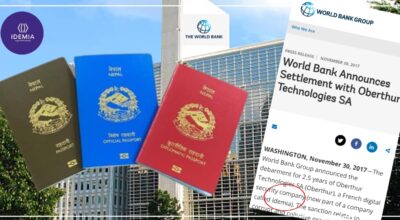
French security printing giant IDEMIA, formerly Oberthur Technologies, which dominated Nepal’s passport printing sector for nearly 15 years, lost the latest international tender for the production of 6.4 million electronic passports. The contract was awarded to German firms Mühlbauer and Veridos, which submitted the lowest evaluated bid of approximately Rs 7.66 billion.
The procurement decision was subsequently reviewed by Nepal’s Public Procurement Review Committee, which upheld the Department of Passports’ evaluation process and rejected IDEMIA’s challenge. The French company later filed a petition at the Supreme Court, where the case remains under consideration.
However, the controversy has taken a new turn amid allegations that various power centers are attempting to influence the outcome of the procurement process even as the matter awaits a final judicial verdict.
Sources familiar with the developments claim that shortly before the scheduled final hearing, IDEMIA sought a postponement of court proceedings. During the same period, concerns emerged over alleged efforts to activate parallel investigations through anti-corruption authorities despite the case already being before the Supreme Court.
Legal experts warn that simultaneous investigations into issues currently under judicial review could create concerns regarding procedural integrity and institutional independence.
The dispute has become increasingly sensitive due to fears of a potential shortage of passport booklets. Officials familiar with the situation say the Department of Passports has limited stock remaining, and any prolonged delay in implementing the new contract could disrupt public services.
Such a scenario, observers argue, could increase pressure on authorities to resort to emergency procurement measures or contract variations, potentially allowing the previous supplier to continue passport production.
The controversy has also renewed attention to a series of observations repeatedly raised by the Office of the Auditor General regarding Nepal’s passport procurement practices. Audit reports over several years have questioned pricing mechanisms, technology acquisition costs, revenue implications, tax compliance issues and repeated use of variation orders in passport contracts.
Despite those findings, many of the concerns highlighted by state auditors remain unresolved.
Questions have also resurfaced regarding historical procurement arrangements involving companies linked to Nepal’s passport printing business, including allegations related to intermediary entities and overseas payment structures. While such issues have been publicly discussed and referenced in audit reports, no comprehensive investigation has produced publicly disclosed conclusions.
Attention has further focused on individuals associated with IDEMIA’s representation in Nepal. Sources allege that efforts are underway to create a favorable environment for the French company’s return to the passport printing sector despite its failure to secure the latest contract. The allegations could not be independently verified, and the parties concerned have not publicly responded.
For governance observers, the dispute has evolved beyond a procurement disagreement into a broader test of transparency, accountability and institutional credibility.
With the Supreme Court expected to deliver a final ruling on the tender process, the outcome is likely to have significant implications not only for Nepal’s passport supply system but also for public confidence in the country’s procurement and oversight mechanisms.
As legal proceedings continue, questions persist over whether the controversy reflects legitimate scrutiny of a major public contract or an effort to reshape the outcome of a tender already endorsed by procurement authorities.
Publish Date: June 25, 2026








Feedback